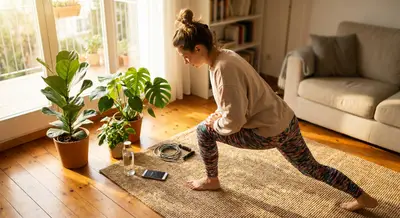
You don’t need a gym membership, fancy equipment, or hours of free time to build a stronger, healthier body. Strength is less about where you work out and more about how consistently you move. With a few smart strategies, you can boost muscle, protect your joints, and feel more energetic—right in your living room, workplace, or neighborhood.
This guide walks you through how to build real-life strength using simple movements, safe progressions, and habits you can actually keep.
Why Strength Matters More Than You Think
Strength training isn’t just for athletes or people who love the gym. It’s one of the most powerful tools you have for long-term health.
Regular strength work can:
- Support healthy blood sugar and lower the risk of type 2 diabetes
- Improve bone density and reduce the risk of osteoporosis
- Protect joints and ease everyday aches by improving muscular support
- Boost metabolism and help maintain a healthy weight
- Support mental health, mood, and sleep quality
- Preserve independence as you age (carrying groceries, climbing stairs, getting up from the floor)
Research suggests that even two short strength sessions per week can significantly reduce the risk of major health issues like heart disease and some cancers. The goal isn’t to become a bodybuilder—it’s to build a body that supports your life, now and in the future.
The Basics: How Much Strength Training Do You Actually Need?
Health organizations like the World Health Organization and U.S. Department of Health and Human Services recommend:
- At least 2 days per week of muscle-strengthening activities
- Covering all major muscle groups: legs, hips, back, chest, core, shoulders, and arms
You don’t have to do long workouts. A realistic starting framework:
- Beginner: 2 days per week, 15–25 minutes per session
- Intermediate: 2–3 days per week, 20–35 minutes per session
- Advanced or active: 3 days per week, 30–45 minutes per session
On each training day, aim for:
- 6–8 total exercises
- 2–3 sets per exercise
- 8–15 controlled repetitions per set
The right level of challenge: the last 2–3 reps should feel effortful, but your form should still feel stable and controlled.
If you’re new to exercise, have a chronic condition, or are recovering from injury, check with a healthcare provider before making big changes. Start slower than you think you need to; you can always add more later.
Core Movements: Strength Exercises That Fit Into Real Life
You don’t need complex routines. Focus on a few key movement patterns that mimic everyday life. Here are practical, equipment-free options you can do almost anywhere.
Lower Body
Sit-to-Stand (Chair Squats)
- Sit on a sturdy chair, feet flat, arms crossed or reaching forward. - Lean slightly forward from the hips, press through your heels, and stand up. - Slowly lower back down with control. - To make it easier: use a higher chair or lightly push off the seat. - To make it harder: pause for 2–3 seconds just above the chair before sitting.
Wall or Counter Calf Raises
- Stand holding a wall or counter for balance. - Lift your heels as high as you comfortably can, pause, then slowly lower. - Great for ankle stability and walking endurance.
Supported Lunges or Split Stance
- Stand near a wall or chair for support. - Step one foot back, bending both knees slightly into a “split squat” position. - Lower a little (it doesn’t have to be deep), then press back up. - Start with small ranges and build as your knees and balance allow.
Upper Body
Wall Push-Ups
- Stand facing a wall, arms outstretched, hands at shoulder height. - Bend elbows and lean your body toward the wall, then push back. - To progress: move your feet further from the wall, or use a counter or table instead.
Doorway Rows (Using a Towel or Sheet)
- Loop a sturdy towel/sheet around a solid door handle on a latched, heavy door. - Lean back holding both ends, arms straight. - Pull your chest toward the door by bending your elbows and squeezing your shoulder blades together. - Keep your body straight like a plank.
Overhead Press with Household Items
- Use water bottles, canned goods, or a backpack. - Start with weights at shoulder level, palms facing forward or toward each other. - Press up until arms are almost straight, then lower with control.
Core and Posture
Modified Plank (Table or Wall)
- Place forearms on a sturdy table or hands on a wall. - Step your feet back until your body forms a straight line from head to heels. - Gently brace your core as if preparing for a light poke in the stomach. - Hold 10–20 seconds, rest, and repeat.
Dead Bug (Back-Friendly Core Work)
- Lie on your back, knees bent, feet on the floor. - Raise arms toward the ceiling. - Slowly lift one leg to tabletop position while reaching the opposite arm overhead, then return and switch sides. - Keep your lower back comfortably supported on the floor.
Wall Angels (Postural Strength)
- Stand with your back and head lightly against a wall, feet a few inches forward. - Bring arms up like a “goalpost” against the wall if possible. - Slowly slide your arms up and down as if making a snow angel. - Focus on gentle contact, not forcing your shoulders.
Pick 1–2 exercises from each category (lower body, upper body, core) to build a simple routine.
Building a Simple At-Home Strength Routine
Here’s a sample beginner-friendly routine you can adapt. Aim for 2 non-consecutive days (for example, Monday and Thursday).
Warm-Up (3–5 minutes)
- March in place or walk around your home
- Gentle arm circles, shoulder rolls, and ankle circles
- Easy torso twists side to side
Main Session
- Sit-to-Stand (Chair Squats)
- Wall Push-Ups
- Supported Lunges or Split Stance (right and left)
- Doorway Rows or Backpack Rows
- Modified Plank (table/wall)
- Calf Raises
How to structure it:
- Start with 1–2 sets of 8–10 reps per exercise (10–15 seconds for planks)
- Rest 30–60 seconds between sets or as needed
- When it feels easier for 2–3 sessions in a row, either:
- Add a third set, or
- Add 2–3 more reps per set, or
- Slow down the movement to 3 seconds up, 3 seconds down
Finish with 2–3 minutes of gentle stretching for areas that feel tight (hips, chest, shoulders, calves).
Progress Safely: How to Know When to Do More (and When to Ease Up)
Progress is how your body adapts and gets stronger, but it has to be gradual and safe.
Signs you can gently increase the challenge:
- Your last few reps feel strong and controlled
- You’re less sore the day after than when you started
- You feel a sense of effort but can still breathe steadily during sets
Ways to progress without risking injury:
- Change leverage: move from wall push-ups to countertop push-ups
- Add time under tension: slow each rep down
- Add light resistance: use resistance bands, filled water jugs, or a backpack
Red flags that mean you should modify or stop:
- Sharp, sudden, or stabbing pain
- Pain that worsens or lingers for days, especially in joints
- Feeling dizzy, faint, or very short of breath
- Chest pain, pressure, or unusual heart symptoms
In these cases, stop and consult a healthcare professional before continuing.
Mild muscle soreness (especially when you’re new) can be normal. Aim for “I feel like I worked” rather than “I can’t move the next day.”
Making Strength Training a Habit You’ll Actually Keep
Consistency matters more than perfection. A few behavior strategies can make strength training feel more automatic:
1. Anchor it to something you already do
- After your morning coffee, do one short strength “circuit.”
- After work, take 5 minutes for chair squats and wall push-ups before you sit down.
- Commit to just 5–10 minutes at first.
- Focus on showing up, not on having the “perfect” workout.
- Keep a resistance band or small weights where you see them (next to the couch or desk).
- Set up a “movement corner” with a mat and a chair to make starting easy.
2. Start smaller than you think
3. Prepare your environment
4. Track real-world wins
Instead of only counting sets and reps, notice changes like:
- Carrying heavy grocery bags feels easier
- Climbing stairs leaves you less breathless
- You can get down to (and up from) the floor more comfortably
These everyday victories are powerful motivators and a better reflection of true fitness.
Adapting for Different Ages, Bodies, and Energy Levels
Strength training is highly customizable. You can adjust intensity to match your life stage, health status, and daily energy.
If you’re older or new to exercise:
- Prioritize balance and joint-friendly moves (sit-to-stand, wall push-ups, heel-to-toe walking).
- Use support (walls, counters, chairs) as needed.
- Break sessions into mini-blocks (two 10-minute sessions instead of one 20-minute session).
If you have a chronic condition (like arthritis, diabetes, heart disease):
- Talk with your healthcare provider before increasing intensity.
- Work within a comfortable range of motion—some discomfort may be okay, but sharp pain is not.
- Consider a session with a physical therapist or certified trainer familiar with your condition.
On low-energy days:
- Shorten the workout, but aim to do something.
- Try one set of just 3–4 exercises.
- Focus on gentle, controlled movements and breathing.
Small, consistent efforts maintain the habit and help you bounce back faster on high-energy days.
Conclusion
Strength training doesn’t have to mean loud gyms, intimidating machines, or complicated programs. With just your body weight, a few household items, and a bit of planning, you can build strength that supports your heart, bones, joints, and everyday life.
Focus on:
- A few simple, full-body movements
- Two or more short sessions per week
- Gradual progress and safe form
- Real-life wins: easier carrying, climbing, moving, and living
Your muscles respond to effort, not perfection. Start where you are, move in ways that feel safe and sustainable, and let strength training become a quiet but powerful part of your daily health routine.
Sources
- [Physical Activity Guidelines for Americans, 2nd edition – U.S. HHS](https://health.gov/sites/default/files/2019-09/Physical_Activity_Guidelines_2nd_edition.pdf) – Official recommendations on weekly strength and aerobic activity for adults
- [World Health Organization: Physical Activity Fact Sheet](https://www.who.int/news-room/fact-sheets/detail/physical-activity) – Overview of health benefits of regular physical activity, including muscle-strengthening
- [Harvard Health Publishing – The Importance of Strength Training](https://www.health.harvard.edu/staying-healthy/the-importance-of-strength-training) – Explanation of how strength training supports metabolism, bones, and long-term health
- [Mayo Clinic – Strength Training: Get Stronger, Leaner, Healthier](https://www.mayoclinic.org/healthy-lifestyle/fitness/in-depth/strength-training/art-20046670) – Practical guidance on types of strength exercises and safe progression
- [National Institute on Aging – Exercise and Physical Activity](https://www.nia.nih.gov/health/exercise-physical-activity) – Evidence-based tips and sample exercises, especially useful for older adults
Key Takeaway
The most important thing to remember from this article is that this information can change how you think about Fitness & Exercise.