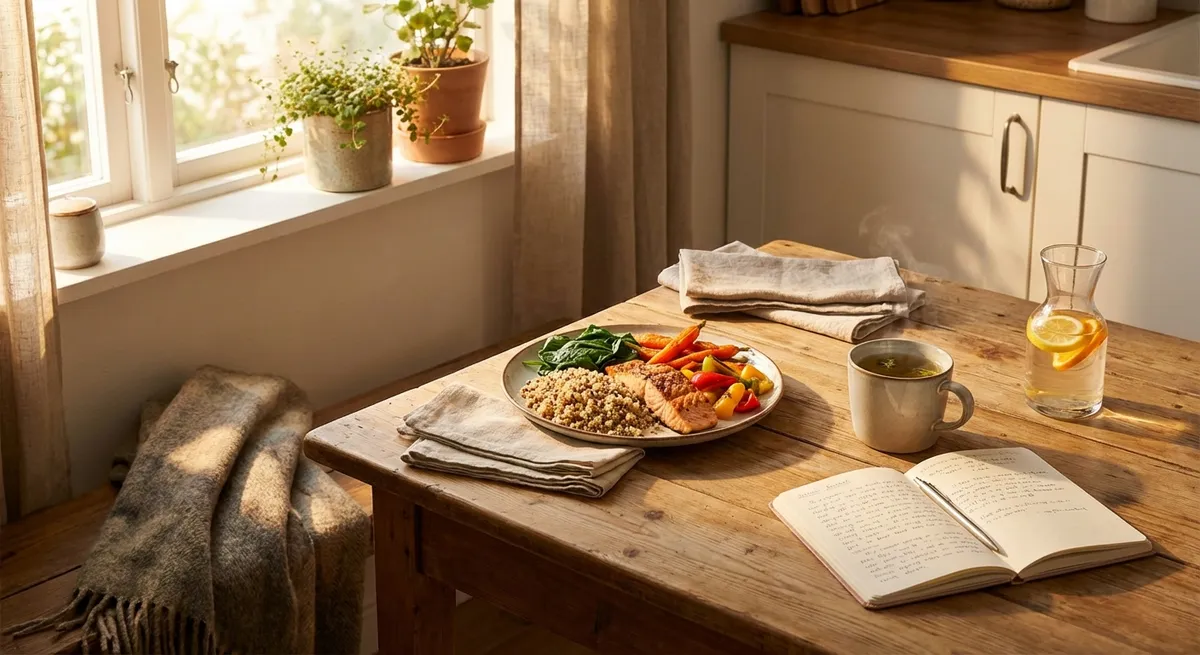
Feeling wired and tired, hungry soon after meals, or crashing mid-afternoon? Often, it’s not how much you eat, but how you build your plate. Steady energy isn’t about perfection or strict diets—it’s about giving your body the right balance of fuel at the right times.
This guide walks you through simple, science-backed ways to build meals that keep your energy stable, mood balanced, and cravings under control.
Start with the “Steady Energy” Plate
Instead of counting calories, focus on the structure of your meals. A balanced plate helps control blood sugar, which is key for consistent energy.
Aim to build most meals using this pattern:
- Half your plate: colorful vegetables
Non-starchy veggies (like broccoli, peppers, leafy greens, carrots, zucchini) add fiber, water, and nutrients with few calories. They help you feel full and support digestion.
- A quarter of your plate: lean protein
Think beans, lentils, tofu, tempeh, fish, eggs, Greek yogurt, chicken, or turkey. Protein slows digestion, stabilizes blood sugar, and keeps you satisfied longer.
- A quarter of your plate: high-fiber carbs
Choose whole grains (oats, quinoa, brown rice, whole-wheat pasta), starchy veggies (sweet potatoes, peas), or beans and lentils. Fiber helps avoid energy spikes and crashes.
- A thumb-size or drizzle: healthy fats
Add nuts, seeds, avocado, olive oil, or nut butters. Fat helps with nutrient absorption and keeps you full, but you only need a small amount.
Example balanced meals:
- Oats cooked with milk, topped with berries and a spoonful of peanut butter
- Brown rice bowl with black beans, roasted veggies, avocado, and salsa
- Mixed greens with chickpeas, quinoa, cucumbers, olive oil, and lemon
You don’t need to be perfect. Use the plate as a flexible guide, especially for your main meals.
Time Your Carbs for Smoother Energy
Carbohydrates are your body’s favorite quick fuel, but the type and timing matter.
To support stable energy:
- Pair carbs with protein and/or fat.
Eating bread alone spikes blood sugar quickly; having it with eggs or hummus slows that rise. The same goes for fruit with nuts or yogurt.
- Front-load higher-fiber carbs earlier in the day.
Many people feel better having more of their grains and starches at breakfast and lunch (like oats or quinoa salads) and a lighter, veggie-and-protein-heavy dinner, especially if they notice sluggish evenings or disrupted sleep.
- Prioritize whole, minimally processed carbs.
Choose whole fruits over juice, whole grains over refined, and beans or lentils regularly. These digest more slowly, giving you longer-lasting energy.
- Be mindful of sugary “energy fixes.”
Energy drinks, sweetened coffee, and pastries can make you feel great briefly—then crash. If you do have them, enjoy with a meal that includes protein, fiber, and fat to soften the impact.
Notice how your body responds over a week when you swap some refined carbs (white bread, sugary snacks) for whole-food options. The goal isn’t restriction; it’s stability.
Make Protein a Quiet Anchor at Every Meal
Many people underestimate how much protein they need to feel steady and satisfied. You don’t have to “load up,” but including some at each meal and snack can make a big difference.
Helpful guidelines:
- Include a source of protein every time you eat.
Examples: eggs, Greek yogurt, cottage cheese, tofu, tempeh, edamame, beans, lentils, fish, poultry, lean meats, nuts, seeds, or soy milk.
- Spread protein evenly through the day.
Many people eat very little protein at breakfast and a lot at dinner. Aim for a moderate amount at each meal instead—this supports muscle health, appetite control, and stable energy.
- Upgrade common meals:
- Toast → Toast with hummus or nut butter
- Pasta with sauce → Pasta with lentils or chicken added
- Salad → Salad with beans, tofu, boiled eggs, or grilled fish
If you often feel ravenous between meals or wake very hungry at night, check whether your meals include enough protein and fiber.
Use Snacks Strategically, Not Randomly
Snacks can either keep your energy stable—or turn into a constant grazing pattern that never really satisfies.
To make snacks work for you:
- Think “mini-meal,” not “treat.”
Combine at least two components: a fiber-rich carb plus protein or healthy fat. This keeps you fuller and reduces cravings.
Examples:
- Apple slices + peanut butter
- Carrot sticks + hummus
- Greek yogurt + berries
- Whole-grain crackers + cheese or edamame
- Snack with purpose.
Ask: “What’s this snack doing for me?” It might bridge you to the next meal, support a workout, or prevent you from arriving at dinner overly hungry.
- Watch “boredom snacking.”
If you’re not physically hungry, consider a non-food break first: a short walk, stretching, or a glass of water and a 5-minute pause. You can still choose to snack after, but it helps you act more intentionally.
Snacks are not “bad”—they’re a tool. Use them in ways that support how you want to feel.
Hydration: The Overlooked Energy Booster
Mild dehydration can show up as fatigue, headache, and “fake hunger” that sends you grazing all day. Many people confuse thirst with hunger, especially in the afternoon.
Practical hydration tips:
- Aim for pale-yellow urine.
This is a more useful guide than forcing a certain number of glasses. Dark yellow usually means you need more fluids.
- Start your day with water.
You lose fluid overnight. Drinking a glass of water before coffee can help you feel more awake and less likely to overdo sugary drinks.
- Flavor water if plain is unappealing.
Try slices of citrus, cucumber, mint, or berries. Unsweetened herbal teas count toward your fluid intake, too.
- Be mindful with caffeinated and sugary drinks.
Coffee and tea are fine in moderation for many people, but energy drinks and sweetened beverages can lead to rapid spikes and dips in energy.
Consider keeping a water bottle visible at your workspace or home. Sometimes, visibility is enough to change your habits without much effort.
Build a Gentle, Realistic Meal Rhythm
Erratic eating—skipping meals, then overeating later—can leave you drained, irritable, and more prone to cravings.
To create a supportive rhythm:
- Aim for regular eating windows.
Many people feel best with 3 meals and 1–2 planned snacks, spaced every 3–4 hours. This helps avoid extreme hunger that leads to overeating.
- Try not to “save up” all your eating for night.
Going long stretches without food can make you overly hungry, making it harder to choose satisfying, balanced options later.
- Match your meals with your life.
If mornings are rushed, prepare portable options: overnight oats, a yogurt-and-fruit parfait, or a whole-grain wrap with eggs or tofu you can eat on the go.
- Protect a calm moment to eat when possible.
Even 5 minutes away from your screen helps you notice fullness cues and enjoy your meal more, which can reduce the urge to keep snacking afterward.
Your “right” rhythm may not look like anyone else’s. The key is consistency and making small shifts that feel doable most days.
Sleep, Stress, and Cravings: The Hidden Nutrition Link
What you eat affects how you feel—but how you sleep and manage stress also strongly affects what you want to eat.
Connections to watch:
- Short sleep often increases cravings.
Poor or short sleep changes hunger hormones, making you more likely to crave sugary, high-fat foods and feel less satisfied after eating.
- Chronic stress can push you toward quick comfort foods.
This is normal biology: your body seeks fast energy when it senses threat. The objective isn’t to eliminate stress, but to support your body in coping.
Supportive strategies:
- Focus on a wind-down routine: dim lights, limit evening screens where possible, and avoid heavy meals right before bed.
- Keep nourishing, ready-to-eat options on hand (like nuts, fruit, pre-cut veggies, or canned beans) so when you’re stressed, better choices are easier.
- If emotional eating shows up, try adding support instead of judgment—hydrate, include protein and fiber in your next meal, and resume your usual rhythm without “punishing” restrictions.
Stable energy is not only about food—it’s a partnership between what you eat, how you sleep, and how you manage stress.
Conclusion
Steady energy isn’t about chasing the perfect diet. It’s about consistent, doable choices that support your body: balanced plates with vegetables, protein, and high-fiber carbs; smart use of snacks; better hydration; and a gentle meal rhythm that fits your life.
You don’t need to change everything at once. Choose one area—maybe adding protein to breakfast, drinking more water, or upgrading your afternoon snack—and test it for a week. Notice how your focus, mood, and cravings respond. Then build from there.
Small, thoughtful shifts in how you structure your meals can quietly transform how you feel from morning to night.
Sources
- [Harvard T.H. Chan School of Public Health – The Healthy Eating Plate](https://www.hsph.harvard.edu/nutritionsource/healthy-eating-plate/) - Explains a balanced plate model emphasizing vegetables, whole grains, healthy protein, and fats
- [Harvard Health Publishing – The truth about carbs](https://www.health.harvard.edu/diet-and-weight-loss/the-truth-about-carbs) - Discusses types of carbohydrates and their impact on blood sugar and energy
- [National Institutes of Health – Dietary Protein and Muscle Mass](https://www.ncbi.nlm.nih.gov/pmc/articles/PMC4258944/) - Reviews the importance of evenly distributed protein intake for health
- [Centers for Disease Control and Prevention – Water & Nutrition](https://www.cdc.gov/healthywater/drinking/nutrition/index.html) - Covers hydration guidelines and the role of water in health
- [National Sleep Foundation – How Sleep Affects Your Hunger Hormones](https://www.thensf.org/how-sleep-affects-your-hunger-hormones/) - Explains the connection between sleep, appetite, and food cravings
Key Takeaway
The most important thing to remember from this article is that this information can change how you think about Nutrition Tips.